




A peanut hides deep meaning: decoding the auspicious code that spans thousands of years
Peanuts always occupy a special position in Chinese dining tables and folk scenes. This deeply buried fruit is not only a unique flavor ingredient, but also endowed with rich meanings and symbols in the long history of inheritance, becoming a cultural symbol that carries people's longing for a better life. From wedding customs and etiquette to festival blessings, from spiritual character to cross-cultural communication, the story of peanuts contains a wealth of life wisdom.
The auspicious messenger in wedding customs: the beautiful expectation of having many children and good fortune
In traditional wedding customs, peanuts are an indispensable "auspicious fruit". In folk culture, peanuts are often paired with red dates, longan, and lotus seeds to form a blessing combination of "having a precious child early", which can be sprinkled on the wedding bed or given as a gift to the newlyweds. The origin of this custom is not only due to the biological characteristics of peanuts, which have multiple seeds in one pod, but also in line with the wish of "a family full of descendants and prosperity"; Also, because the word "peanut" is interpreted as "born with flowers", it conveys a beautiful blessing for the newlyweds and their children.
In the bridal ceremony in the southern Fujian region of China, the process of scattering peanuts with shells on the wedding bed concretizes this blessing - the hard shells and plump kernels symbolize the "softness on the outside and strength on the inside" of marital love, as well as the marriage philosophy of "unity of heart and virtue". In the Chaoshan area, the custom of throwing peanuts to villagers by households who have given birth in the first lunar month has been going on for three hundred years. In Chaoshan dialect, peanuts sound like "will give birth", and grabbing peanuts symbolizes the import of new children and a successful marriage the following year.
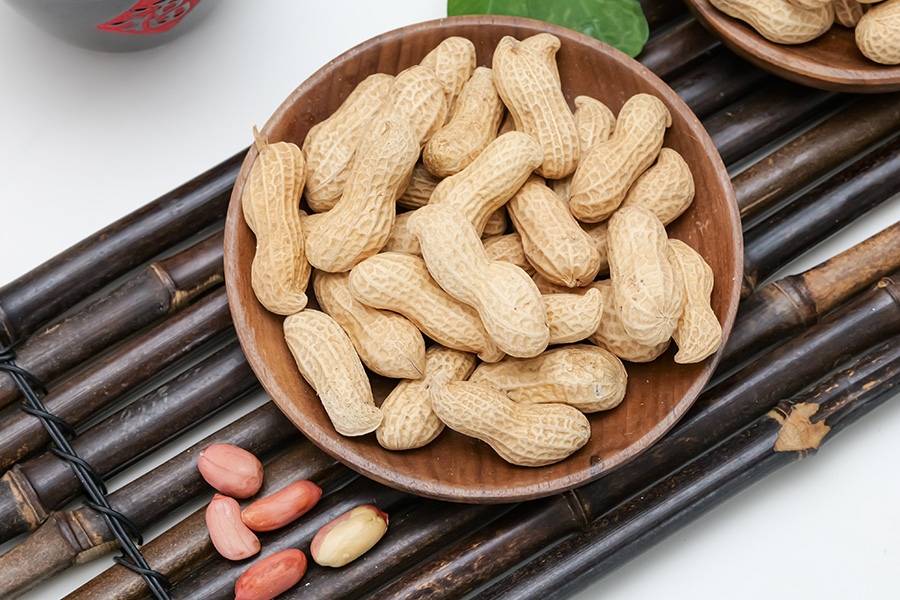
The symbol of health at the birthday banquet: the longevity wish in the fruit of longevity
Peanuts are known as the "longevity fruit" in folk culture, which originates from their rich nutritional value and carries people's simple pursuit of health and longevity. On the birthdays of elders, younger generations often give peanut products or jade carved peanut ornaments as gifts to express their blessings of "longevity and strong health"; Placing peanuts at festive banquets also implies the expectation of a safe, long-lasting, and stable life.
This wish for longevity has also extended into the culture of dietary therapy. According to traditional Chinese medicine classics, peanut clothing has hemostatic effects, and its branches and leaves can clear heat. In folk culture, peanuts are often stewed with red dates, wolfberries, and other nourishing soups to incorporate the desire for health into daily diet. The colorful peanuts in the Dai ethnic region of Yunnan, which were once offered as tribute to the royal family, have now become a folk symbol carrying the meaning of "colorful and prosperous, longevity and health", integrated into local cuisine and festival culture.
The metaphor of character in the spiritual world: low-key and pragmatic growth of wisdom
The growth characteristics of peanuts, which bloom on the ground and bear fruit underground, have been endowed with profound spiritual connotations and become a symbol of low-key practicality and perseverance. The proverb circulating in rural Shandong, 'Peanuts bear fruit but no flowers, be down-to-earth and do not exaggerate', transforms the wisdom of plant growth into a philosophy of life, praising those who silently cultivate and do not seek fame in life.
In his essay "Falling Flowers", modern writer Xu Dishan uses his father's words to express the value of peanuts: "They are useful, not great or beautiful things." He extracts the characteristic of peanuts that "usefulness is virtue" into a pragmatic value system, which has influenced generation after generation. The folk rhyme of Fuqing, 'Root by root, beard by mud, build your own house and settle down. Flowers bloom on the ground but do not bear fruit, and underground fruits are not exaggerated,' vividly depicts the character of peanuts as' demanding little but dedicating a lot '.
Multidimensional Imagery in Cross Culture: Symbols Connecting Tradition and Modernity
The cultural significance of peanuts is not limited to the Chinese context. During the Age of Discovery in the 16th century, peanuts were introduced to China as witnesses of the "Great Geographical Discoveries" and embarked on a journey of cross-cultural dissemination. In the West, peanuts are used as a metaphor for the meager wages of lower class workers, such as the American slang "working for peanuts"; It has also become a symbol of growth in adversity, and the salt baked peanuts on the baseball field carry the spirit of "breaking through darkness and persevering in growth", resonating with the Eastern philosophy of "accumulating and developing".
From the interpretation of five colored peanuts in the Ming and Qing dynasties as auspicious items that "harmonize the five elements and stabilize family fortune", to the agricultural value of modern science revealing their drought resistant genes; From the student token symbolizing "success in the imperial examination system" to the leisure food that is now integrated into daily life, the meaning of peanuts has been constantly enriched, always connecting tradition and modernity, nature and culture.
A small peanut carries multiple meanings of life continuation, health and longevity, and practicality and resilience, surpassing the value of the food itself. It is hidden in the details of folk customs and integrated into the inheritance of spirit, becoming a warm and vivid symbol in Chinese culture, continuously writing people's longing for a better life.